
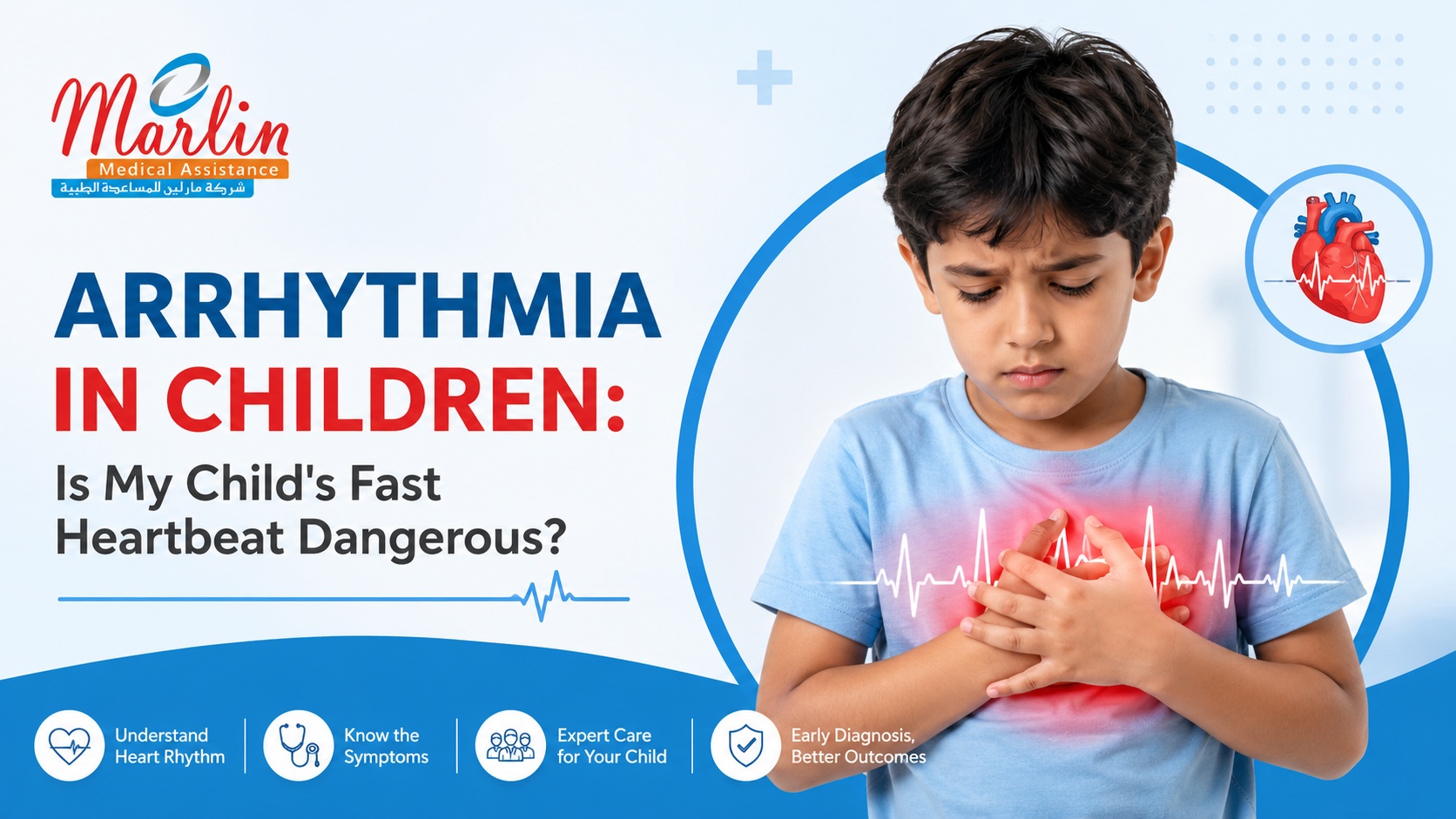
A fast heartbeat in children is often harmless, especially during exercise, fever, or excitement. However, if it occurs suddenly, frequently, or is accompanied by dizziness, fainting, chest pain, or breathing difficulty, it could indicate an arrhythmia. Early diagnosis by a pediatric cardiologist helps identify the cause and ensures timely treatment, keeping your child's heart healthy and safe.
Normal vs Abnormal Heart Rate in Children — What Are the Ranges?
A baby's heart beats fastest and then gradually changes its frequency with time, activity level, moods and whether they have a fever or not. At very early stages, babies' and little children's heart rates are naturally higher. Newborns typically average between the heartbeats per minute (bpm) of 120 and 160 (beats per minute) when at rest, but babies within the ages of about 1 to 12 months, normally have between 90 and 150 bpm. It is common for 1-3 year old babies to have heart rates of 70-130 bpm and school children aged 7-12 around 60-100 bpm. Teenage (aged 13 to 18) of 50-100. A very slow heart rate should instantly be considered mainly if it is accompanied by symptoms of very light-hearted condition, or breathing problems etc. Some arrhythmias are nothing to worry about and they just come and go but others might be due to congenital heart disease infections, electrolyte imbalance, or inherited electrical problems.
Types of Arrhythmia That Affect Children
Cater to the needs of diverse arrhythmia conditions among children, that may present the heart with abnormal rhythm to be too fast, too slow or irregular. Supraventricular Tachycardia (SVT) is the one that children are more likely to be having at younger ages. The condition is characterized by a sudden and intense increase in heartbeat, which may result in feeling of a racing heart, giddiness, or poor feeding among infants. PACs and PVCs are extra heartbeats that often go ignored but could require medical review if they come too regularly. Bradyarrhythmia is a term used for really slow heart beating. In some situations, that can be caused either by heart problems present at birth or issues in heart electrical system. VT or Ventricular Tachycardia, then again, is one of the extremely rare types of arrhythmia, which is serious by nature, and is a result of lower heart chambers beating very fast so as the whole cardiac system gets disturbed requiring immediate hospitalization for diagnosis.
Symptoms: When Is a Fast Heartbeat in a Child Concerning?
Sometimes, kids' hearts beating fast are just a normal thing, not a serious matter. There are different reasons like physical activity, running a fever, being excited, feeling anxious or even being dehydrated that may lead temporarily to a fast heart rate. Still, if there is a persistently very fast heart rate or one that happens abruptly without an apparent reason, it might be a sign of arrhythmia, a type of abnormal heartbeat rhythm that you should consult a doctor about. If a child has symptoms indicating arrhythmia, such as feeling the heart as if it were beating or pounding very hard (palpitations), experiencing chest discomfort, fainting, getting very tired without a good reason, being short of breath or having blue or very thin skin and not eating properly, then a specialist should be consulted right away.
Some children complain that their "heart is beating too fast" or may start getting agitated for no reason. Episodes that last several minutes, occur several times within a short interval, or happen when the person is resting are the ones that need to be followed up with medical attention promptly. It is a good idea to take your child out for the emergency treatment if he or she passes out, has very severe angina of the chest, finds it quite hard to inhale, or even becomes unconscious during such a situation of rapid heartbeat.
Pediatric cardiologists are doctors who specialize in heart problems in children, and they can use diagnostic methods like an electrocardiogram (ECG) and Holter monitor or echocardiogram to find out what the actual cause of the issue is and then, if required, they can suggest a course of treatment.
What Causes Arrhythmia in Children?
A child's heart beats out of rhythm if the heart's electrical system doesn't work in harmony. A few kids have these issues since birth like having abnormal electrical pathways or some defect in the heart at birth, which can raise the chances of arrhythmias. Infections in the heart, for instance myocarditis may affect the normal beats for a short term. Imbalances of electrolytes like a problem with the level of potassium, calcium, or magnesium can also get in the way. Certain drugs and stimulants that include too much caffeine as well as some chronic conditions such as thyroid problems can be potential reasons of irregular heart beats. A very stressful or physically active period can bring up a hidden arrhythmia sometimes in kids who are vulnerable to those. In a minority of patients, the cause is genetic factors like Long QT syndrome and Brugada syndrome where a child's heart's ability to generate electrical impulses is disturbed which can result in life-threatening disruptions. Actually quite a number of rhythm irregularities of the heart in children are benign, but symptoms like irregular heart beats, unsteady gait, sudden unconsciousness, pain in the chest or breathing difficulty are signs that one should not overlook. The best is to check the heart's work out through a professional pediatric cardiologist without delay.
How Is Childhood Arrhythmia Diagnosed? — ECG and Holter Monitor
The main diagnostic test is an electrocardiogram (ECG) which, without causing the patient any pain, can record the heart's electrical activity in just a few minutes at a time. With the help of that test, irregular heartbeat, problems in the conduction pathways, as well as manifestations of other disorders of the heart can be detected. Keep in mind sometimes the heart rhythm can become irregular just once or from time to time. That means, a normal ECG result may not exclude them. It may this way be necessary to use a different recording method like a Holter monitor. This mobile device can track continuously the patient's heart rhythm for 24 to 48 hours and, in case of extended monitoring, can be used for much longer periods. Its purpose is to detect the transient rhythm disorders which happen when the patient is performing different activities or even when sleeping.
Treatment Options for Childhood Arrhythmias
Treatment of childhood arrhythmias mainly depends on the kind and severity of the rhythm disorder, the child’s age, and presence of symptoms. Harmless types of arrhythmias may just be watched through regular check-ups without any other active treatment. Sometimes, intervention with medicines like beta-blockers, or other antiarrhythmics may be able to stabilize the heart rhythm. If a very fast rhythm needs to be addressed, even catheter ablation might be indicated. The heart is reached by a thin catheter which goes in through a small cut on the skin and moves towards it to destroy or damage tissue which generates the abnormal signals. The heart rhythm can also be helped with a pacemaker in some cases where the child’s heart beats too slow. A cardioverter-defibrillator (ICD) that can sense and stop fatal heartbeats on its own would be needed only in rare situations where arrhythmia is life-threatening. Surgery is another possibility for arrhythmia that is the result of congenital heart disease but it is quite exceptional. Visiting the pediatric cardiologist regularly is the best way to be on medication properly, maintain good heart condition, and enjoy normal life.
When Is a Child's Arrhythmia a Medical Emergency?
A child experiencing an arrhythmia that severely affects their heart's ability to pump blood, or displaying really serious symptoms, should be treated as medical emergencies, in such situation it is very important to go to a doctor with your child and seek immediate care if your child is fainting, More exactly during physical activity, has very severe chest pain, is out of breath, appears with blue skin or lips, is very weak or disoriented, or having a really long episode of a very fast or very slow heart rate. Babies are less able to express pain through words, but they might indicate distress through signs like, poor eating, excessive sleepiness, breathing rapidly or crying constantly. You and other adults around should call emergency first and then if it is the right time to begin the CPR. For example, sustained ventricular tachycardia or complete heart block are forms of arrhythmias that generally indicate grave complications without immediate emergency treatment. Obviously, many cases of childhood arrhythmias are benign and there is little to worry about. Still, if the palpitations are so intense and the dizziness, the fainting spells or shortness of breath have become frequent, you have to definitely do something and rather contact the doctor than the problem being neglected. In every situation a timely consultation of a pediatric cardiologist or a doctor in an emergency room as well as the results of a few investigations like the ECG will generally reveal the exact problem in a very short period and provide a clear guide in treatment. This is how you prevent major health complications and give back the heart a really healthy life.
Get your consultation from Marlin today