
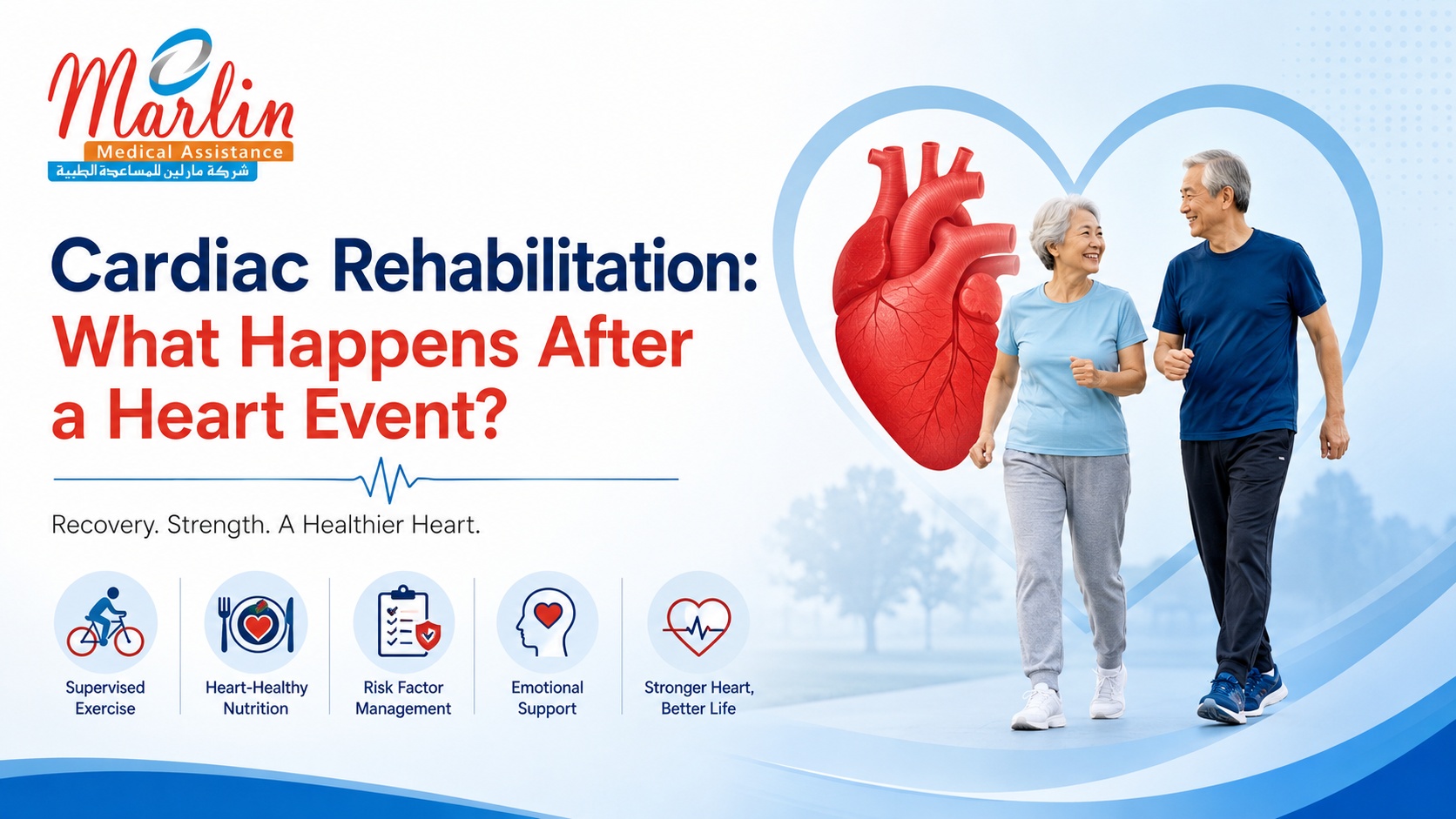
Cardiac rehabilitation is a medically supervised program that helps people recover after a heart attack, heart surgery, angioplasty, or heart failure. It combines monitored exercise, heart-healthy nutrition, medication management, risk factor control, and emotional support. Cardiac rehabilitation improves strength, reduces the risk of future heart problems, boosts confidence, and helps patients safely return to daily activities and work.
What Is Cardiac Rehabilitation? - The Programme Explained
Cardiac rehabilitation is a health-programme, supervised by doctor, aimed at helping people to get well after suffering a heart attack and heart surgery, and the patients who've undergone angioplasty, have heart failure or other cardiovascular diseases. This rehabilitation method is based on the combination of physical activities performed in a structured manner, healthy heart education, counselling about nutrition, guidance in managing the intake of medicine, and providing psychological counselling. It aims to improve the general conditions of the heart, which includes getting back the capacity to do exercises. Each cardiac rehab programme is developed as the patients' chronological age, general health, physical condition and their disease, to ensure a progressive and safe recovery. Patients participate in the process of risk factor management that involves the monitoring of high blood pressure, diabetes, high cholesterol, smoking, obesity, and stress. The team of professionals involved are medical doctors, physical therapists, cardiac nurses, dieticians, and psychiatrists who collaborate in patients' recovery.
Who Should Attend Cardiac Rehabilitation?
Cardiac rehabilitation should be considered for people who are getting back to health from heart disease or are managing it. There are specific groups of people who would get most benefit from it: those who suffered a heart attack, those who got their coronary arteries opened by stent, people who had CABG surgery, those who underwent heart valve surgery or those who received a new heart. Other patients who may be advised to undergo cardiac rehabilitation are those with controlled heart failure, angina or certain conditions of heart present from birth. It is suitable for adult patients of any age group as long as a doctor checks that they are medically fit to take part in the programme.
What Happens During a Cardiac Rehab Session?
Before the actual workout, you would go through a health screening. They take your heart rate and blood pressure as well as weigh you. Any symptoms you have since your last consultation get reported too. Then, under professional supervision, you'll engage in activities like walking on a treadmill, cycling, or do a light strength training exercise. The intensity will be matched with your fitness level and heart problem. Throughout, a medical team watches your development, ensuring that nothing goes beyond a safe limit. Beyond exercise, a cardiac rehab session is a good opportunity to educate yourself on what you need to do for the health of your heart. You may get support on the topic of diet modification, medication taking, stress relieving, and eliminating risk factors like smoking and high cholesterol. The overall purpose of each session is to make your heart stronger, boost your self-esteem, and help you to get back safely to your daily tasks.
Benefits of Cardiac Rehabilitation - What the Evidence Shows?
Cardiac rehabilitation is considered one of the best ways one can recover from a heart condition like heart attack, heart surgery, angioplasty, or heart failure. Evidence-based studies indicate that individuals who get engaged with a cardiac rehabilitation program experience lesser chances of having more heart complications in the future, being re-hospitalised, and dying early. Exercise is one of the components of cardiac rehabilitation. With a combination of physical effort (i. e. exercising), cardiovascular fitness gets improved a lot. Besides, educational sessions equip the patients to handle blood pressure, cholesterol level, diabetes as well as weight in a much more efficient way. Incorporation of counselling as well as emotional support is another vital aspect since it plays a role in decreasing heart-related issues like anxiety, depression, & stress, that could cause harm to one's health in a heart disease patient. Long-term investigations constantly confirm that besides improving heart-related health and quality of life, cardiac rehabilitation also reinforces the adoption of healthy lifestyle habits and so it is indispensable as an integral part of comprehensive care to the cardiovascular disease patients.
Cardiac Rehabilitation in Kenya and Tanzania - What Is Available?
Cardiac rehabilitation services are available in both countries Kenya and Tanzania, but the access remains very limited mostly in areas outside the big cities. In Kenya, most tertiary hospitals and specialist cardiac centres run formal rehabilitation schemes consisting of exercise under supervision, heart health education, dietary advice, drug information and psychological support. Tanzania also offers heart disease rehabilitation by some referral hospitals and special heart institutes although the services are not as wide spread. A number of patients are constrained, for instance, by distance to the service, lack of awareness as well as shortage of qualified rehabilitation personnel. To reach more patients, some providers have started home visits, online consultations and community level follow up.
Exercising Safely After a Heart Event - The Ground Rules
Returning to regular exercise is Definitely beneficial for healing but it is only possible for one who is absolutely safe to do so. Before even changing or initiating an exercise program, it is advised to contact one's primary health care provider or cardiac rehabilitation unit team. One's heart has just had a major event and is in the healing phase so the initial exercise programme should be quite light and not very vigorous at all like just taking a walk or using stationary bicycles; and it's better to take one's time to build-up the intensity of a routine gradually. Getting the body warm by doing some mild exercise like stretches before a full workout, or warming up, can prepare the body in general and the heart can better adjust. One should know that in an event of one being physically stressed, having a lot of difficulty in breathing, feeling dizzy or one hears one's heart thumping, it is necessary to stop one's exercise immediately and inform the doctor about the situation that has just happened. It is definitely the case that it is better to have frequent light exercises than having occasional yet very hard workouts. If physical exercise is practiced the right way, the heart is not only going to get stronger but also one's overall fitness will be enhanced and one will feel better during the recovering process.
Get your consultation from Marlin today